
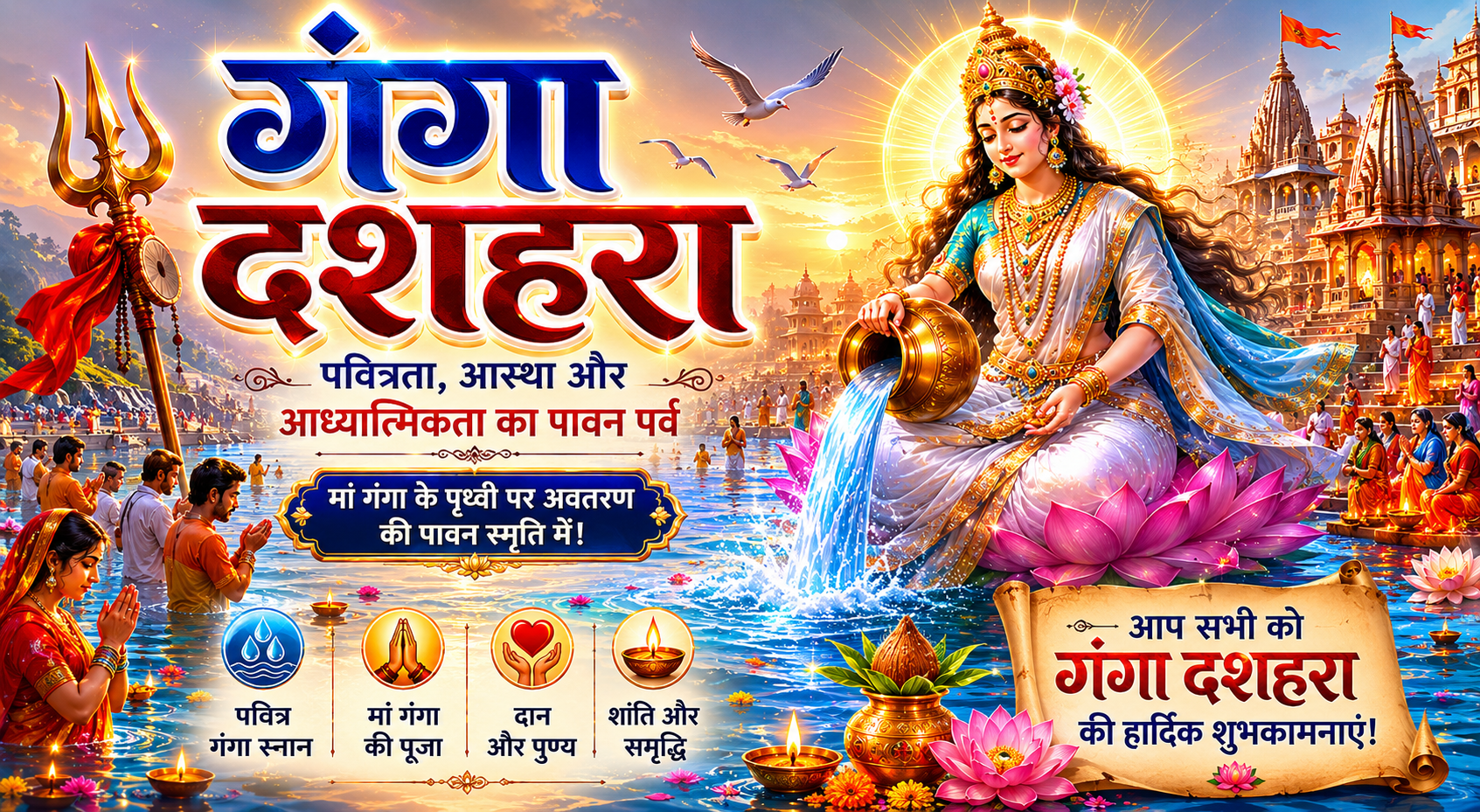


Ganga Dussehra is considered one of the most sacred and important festivals in Hinduism. It is celebrated every year on the Dashami Tithi of the Shukla Paksha in the month of Jyeshtha. According to religious beliefs, this is the day when Maa Ganga descended from heaven to Earth. On this occasion, millions of devotees take a holy dip in the Ganga River, perform prayers, and engage in charity, seeking peace, prosperity, and positivity in life. But have you ever wondered why Ganga Dussehra is celebrated and why bathing in the Ganga is considered so significant? Let’s understand in detail.
Why is Ganga Dussehra Celebrated?
According to Hindu mythology, Ganga Dussehra is associated with the intense penance of King Bhagirath. It is believed that King Bhagirath performed severe austerities for many years for the salvation of his ancestors. Pleased with his devotion, Maa Ganga agreed to descend to Earth.
However, there was a major concern: the force of Ganga’s descent was considered so powerful that it could have caused destruction on Earth. Therefore, Lord Shiva held Maa Ganga in his matted hair and gradually released her flow onto Earth.
This divine event is believed to be the reason why Ganga Dussehra is celebrated. It is not only a religious occasion but also a symbol of faith, devotion, and spiritual awakening.
What Does Ganga Dussehra Mean?
The word “Ganga Dussehra” is made up of two words:
Ganga – Symbolizing Maa Ganga
Dussehra – Meaning the destruction of ten sins
According to religious beliefs, worship and holy bathing on this day are associated with freedom from ten types of sins. This is considered a matter of faith and spiritual belief.
What is the Significance of Ganga Snan (Holy Bath)?
On Ganga Dussehra, millions of devotees visit sacred places such as Haridwar, Prayagraj, Varanasi, Rishikesh, and other holy locations to take a dip in the Ganga River.
The importance of Ganga Snan is linked with several beliefs:
Spiritual Purification
Ganga water is considered a symbol of purity, and devotees believe it helps bring peace to the mind and soul.
Removal of Negativity
Many people believe that bathing in the Ganga helps reduce negative energy and attract positivity.
Connection with Salvation
Religious scriptures describe the Ganga as “Mokshadayini,” meaning the giver of liberation, and it is associated with spiritual growth.
Faith and Devotion
Many devotees take a holy bath simply as an expression of faith and tradition.
What Do People Do on Ganga Dussehra?
People participate in various religious activities on this day:
Take a holy bath in sacred rivers
Offer prayers to Maa Ganga
Chant spiritual mantras
Perform acts of charity and donation
Popular Mantra:
"Om Gange Cha Yamune Chaiva Godavari Saraswati,
Narmade Sindhu Kaveri Jalesmin Sannidhim Kuru."
Modern Importance of Ganga Dussehra
Today, Ganga Dussehra is not only seen from a religious perspective but also as a message of environmental awareness and river conservation.
The Ganga River is a source of faith and life for millions of people. This festival also inspires people to maintain cleanliness and protect nature.