
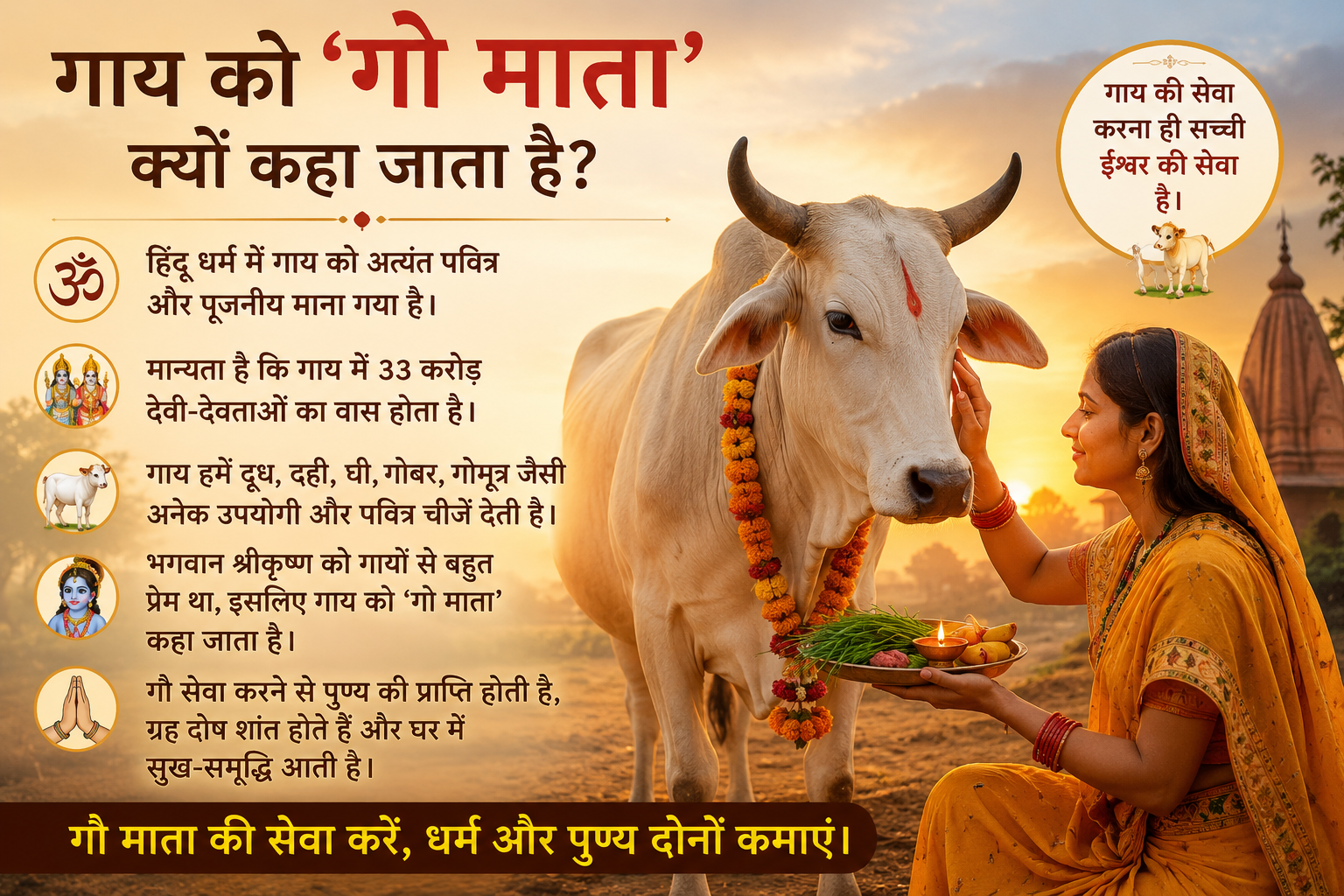


In Indian culture and Sanatan Dharma, cows are considered extremely sacred, auspicious, and worthy of worship. For centuries, the cow has not been seen merely as an animal but as a symbol of faith, spirituality, service, compassion, and positive energy. In India, people respectfully call the cow “Go Mata” (Mother Cow) and worship her with devotion. Along with religious beliefs, astrology also gives great importance to cows and cow service.
Even today, many people feed cows, serve them, and consider receiving the blessings of Go Mata to be highly auspicious. But why is the cow given such high respect? What do Hinduism and astrology say about it? Let us understand in detail.
Why Is the Cow Called “Go Mata” in Hinduism?
In Sanatan Dharma, the cow is regarded as a mother because she nourishes humanity selflessly. Just as a mother takes care of her children, the cow is believed to support human life through milk and other useful products.
Religious scriptures and Puranas describe the cow as a form of “Kamdhenu,” the divine wish-fulfilling cow.
According to religious beliefs:
33 crore deities are believed to reside within the cow
Lord Krishna was deeply connected with cows
Serving cows is considered a highly virtuous act
The cow symbolizes compassion, dharma, and kindness
This is why cows are respectfully called “Go Mata.”
Lord Krishna and the Cow
Lord Krishna is known as “Gopal” and “Govind” because his life is closely associated with cows. Scriptures describe how Lord Krishna lovingly cared for cows and considered them very dear.
Religious beliefs say:
Serving cows may help receive Lord Krishna’s blessings
Cow service is connected with devotion and dharma
Feeding cows is considered auspicious
This is why many people feed cows with roti, jaggery, or green grass daily.
Why Is Cow Worship Considered Important in Hinduism?
In Sanatan Dharma, cow worship is not only seen as a religious practice but also as a source of positivity and spiritual merit.
1. Residence of Divine Energies
It is believed that many divine energies and deities reside within the cow. Therefore, worshipping a cow is considered equivalent to worshipping the divine.
2. Source of Positive Energy
Many people believe cows carry calm and positive vibrations. Serving cows is believed to bring peace, prosperity, and harmony into life.
3. Importance in Rituals and Yajnas
Cow dung, cow urine, milk, curd, and ghee are used in many Hindu rituals and yajnas. These are considered sacred and spiritually purifying.
Astrological Importance of the Cow
Astrology also considers the cow highly auspicious. Many remedies related to planetary doshas involve feeding or serving cows.
1. Remedies for Planetary Problems
According to astrology, feeding cows may help reduce the negative effects of certain planets.
For example:
Feeding a black cow is associated with Saturn (Shani)
Feeding a white cow is linked with the Moon and Venus
Feeding green fodder to cows is connected with Mercury
Many astrological remedies recommend cow service for positivity and peace.
2. Shani Dosha and Cow Service
People troubled by Shani Dosha are often advised to feed black cows with roti, jaggery, or oil-applied bread. This is believed to reduce the negative effects of Saturn.
3. Rahu-Ketu Related Beliefs
Some astrological beliefs suggest that serving cows may help reduce negative energies associated with Rahu and Ketu.
4. Connection with Pitru Dosha
Many people believe that feeding cows and donating for cow welfare may help in reducing Pitru Dosha and bringing ancestral blessings.
Cow and Positive Energy
Astrology and Vastu Shastra consider the cow a symbol of positivity and spiritual purity.
Beliefs suggest that:
Touching a cow may provide mental peace
Serving cows may increase positivity in the home
Cow blessings are associated with spiritual merit and divine grace
However, these beliefs are based on religious and astrological traditions.
Why Is Cow Service Considered a Virtuous Act?
Sanatan Dharma gives great importance to selfless service. Serving cows is considered an act of compassion and dharma.
People often:
Feed cows with roti or fodder
Donate to gaushalas (cow shelters)
Help sick or injured cows
Participate in cow welfare activities
According to religious beliefs, such acts may bring spiritual merit and blessings.
Scientific and Social Importance of Cows
Along with religious and astrological significance, cows also have social and practical importance.
Cow milk is considered nutritious
Cow dung is useful in organic farming
Cows have historically supported rural economies
Festivals Related to Cow Worship
Several Indian festivals include cow worship rituals, such as:
Govardhan Puja
Gopashtami
Krishna Janmashtami
Makar Sankranti
On these occasions, cows are decorated and worshipped with devotion.
Both Hinduism and astrology consider the cow highly sacred and auspicious. In Sanatan Dharma, the cow is respectfully called “Go Mata” because she symbolizes compassion, nourishment, positivity, and dharma. Astrology also connects cow service with planetary peace, spiritual positivity, and divine blessings.
According to traditional beliefs, worshipping and serving cows may bring happiness, peace, prosperity, and positive energy into life. This is why cows continue to hold a deeply respected place in Indian culture and spiritual traditions.