
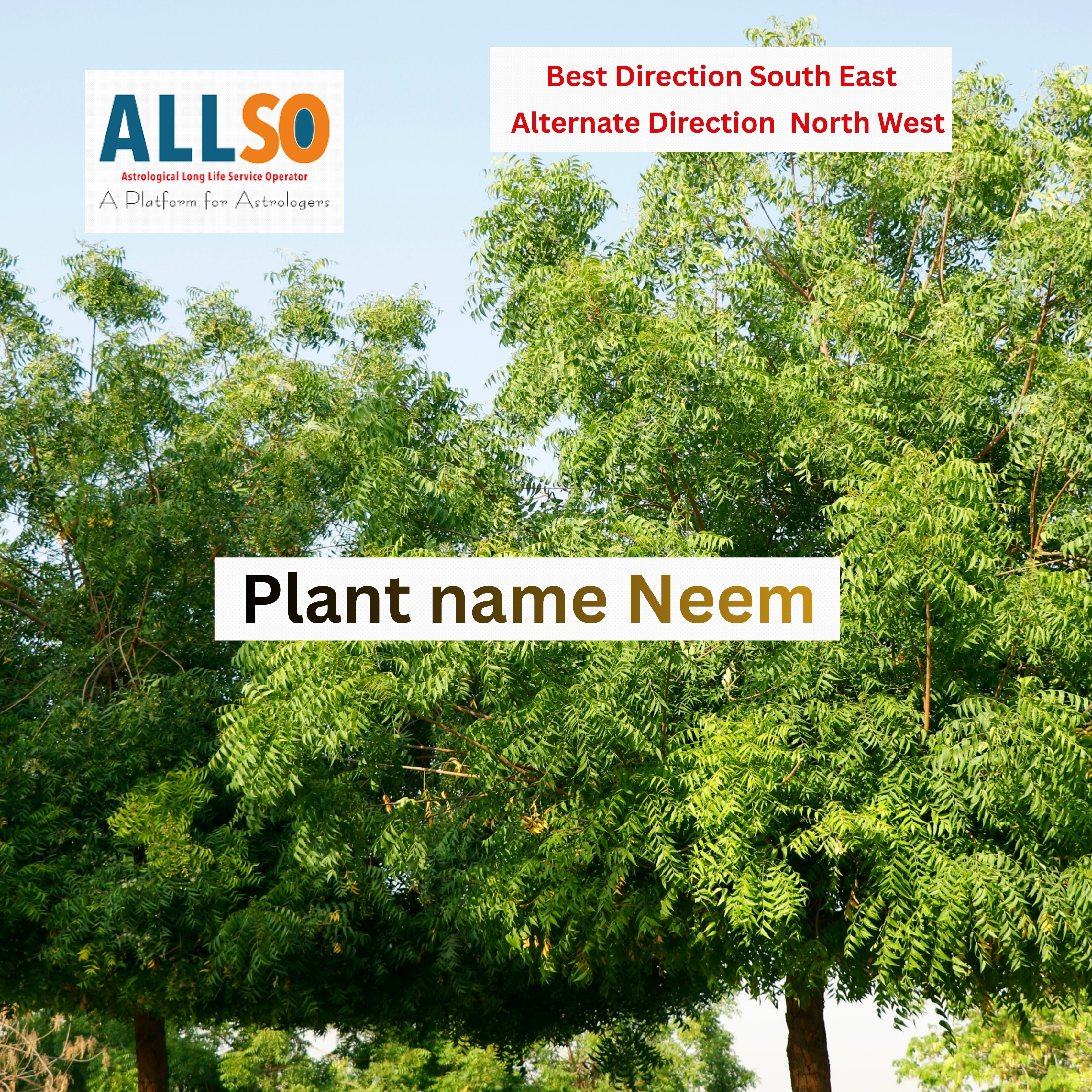


Introduction: India's Divine Healer
In the ancient tapestry of Indian botanical heritage, few trees command the reverence and spiritual significance of the Neem tree (Azadirachta indica). Native to the Indian subcontinent, this magnificent evergreen has been interwoven with human civilization for over 4,000 years, serving as nature's pharmacy, a spiritual sentinel, and a cornerstone of Vastu Shastra—the ancient Indian science of architecture and cosmic energy alignment.
The Neem tree transcends its biological identity as merely another member of the Mahogany family. It stands as a living testament to the sophisticated understanding our ancestors possessed about the intricate relationship between botanical life, planetary influences, and human wellbeing. Revered as a sacred plant across Hindu, Buddhist, and Jain traditions, Neem embodies the principle that nature holds profound wisdom for those who approach it with respect and knowledge.
Traditional Indian medicine systems—particularly Ayurveda—have utilized every part of the Neem tree for therapeutic purposes. From its bitter leaves to its potent seeds, from its healing bark to its purifying flowers, Neem has earned its Sanskrit name "Arishtha," meaning "reliever of sickness." But beyond its medicinal prowess lies an equally significant dimension: its role in the subtle energy architecture of our living spaces.
The Cosmic Identity of Neem in Vastu Shastra
Planetary Rulership and Energetic Signature
According to Vastu Shastra and Vedic astrology, the Neem tree operates under the dominion of Venus (Shukra), the planet governing beauty, prosperity, relationships, and material comforts. This planetary association is not arbitrary but reflects the tree's inherent qualities and the specific vibrational frequency it emits—precisely 1.1 Hz, a resonance that harmonizes with Venusian energies in the cosmic spectrum.
Venus's influence manifests through Neem in fascinating ways. Despite the tree's bitter taste—seemingly contradictory to Venus's association with sweetness and pleasure—the underlying principle reveals itself in Neem's ability to purify and beautify our environment at subtle levels. Just as Venus governs aesthetic refinement, Neem refines the energetic quality of spaces it inhabits, removing negative influences and establishing conditions for prosperity.
The tree's male polarity indicates its active, projective nature in energy dynamics. Unlike female-polarity plants that receive and nurture energy, Neem actively radiates its influence, creating a protective shield with an impressive aura strength of 27 feet. This substantial energetic field makes proper placement absolutely crucial—when positioned correctly, this protective sphere becomes a blessing; when misplaced, it can create energetic blockages in your living space.
The Root System: Nature's Energy Transformer
The maximum energy concentration in Neem resides within its root system, a remarkable feature that ancient Vastu practitioners recognized long before modern science could explain bio-electromagnetic fields. The roots don't merely anchor the tree physically; they function as energetic transformers, drawing telluric currents from the earth and converting them into beneficial radiations that permeate the surrounding environment.
This root-based energy system interacts with what Vastu calls "Bhugol Shakti"—the magnetic field of the earth. Neem roots penetrate deeply, sometimes reaching 15-20 feet below ground level, accessing mineral-rich soil layers and underground water channels. This deep connection allows the tree to tap into primordial earth energies, channeling them upward through its trunk and branches, where they disperse as beneficial vibrations throughout its 27-foot aura.
Directional Wisdom: Placement for Prosperity
Optimal Directions: South East and North West
The primary direction for Neem plantation is the South East sector of your property, governed by the fire element (Agni) and ruled by Venus. This placement creates a powerful synergy between the tree's Venusian nature and the directional energy, establishing what Vastu experts call "Grah-Disha Sammillan"—planetary-directional harmony.
When positioned in the South East, Neem acts as an energetic catalyst for:
Financial Growth and Abundance: The combination of Venus's prosperity-bringing nature and the South East's wealth-generating qualities creates favorable conditions for material success. Residents often experience improved business opportunities, unexpected gains, and better financial decision-making capabilities.
Enhanced Creativity and Innovation: The fire element of South East, when harmonized with Neem's vibrations, stimulates the creative centers of consciousness. This proves particularly beneficial for artists, entrepreneurs, and anyone engaged in innovative pursuits.
Relationship Harmony: Venus's influence on interpersonal relationships becomes amplified, promoting understanding, affection, and cooperative spirit among family members. Arguments decrease, and a general atmosphere of pleasantness pervades the household.
Protection from Negative Energies: The South East Neem acts as a guardian, deflecting malefic influences, evil eye, and environmental negativity. Its aura creates an invisible shield that maintains the sanctity of your domestic space.
The alternate direction—North West—offers different but equally valuable benefits. Ruled by the Moon and associated with the air element (Vayu), this placement emphasizes mental peace, improved communication, and enhanced social standing. North West Neem particularly benefits:
- Individuals in communication-related professions
- Those seeking to expand social networks and helpful connections
- Families experiencing discord or misunderstanding
- People dealing with mental stress or anxiety disorders
Directions to Avoid: West and South West
The prohibition against planting Neem in West and South West directions stems from fundamental Vastu principles regarding energy flow and elemental balance. The West direction, governed by Saturn and associated with water element, creates an incompatible relationship with Neem's Venusian nature. Saturn and Venus are natural enemies in Vedic astrology—their energies clash rather than complement.
When Neem occupies the Western sector, several negative manifestations can occur:
Limited Life Opportunities: The restrictive nature of Saturn, when combined with misplaced Venusian energy, creates barriers to progress. Career advancement becomes difficult, promising opportunities slip away, and general stagnation affects multiple life areas.
Financial Constraints: Perhaps the most noticeable effect is the cash crunch that families experience. Money seems to flow out faster than it comes in, unexpected expenses arise repeatedly, and savings prove difficult despite adequate income.
Planning and Decision-Making Problems: The mental faculty suffers, leading to poor judgment, impulsive decisions, and inability to execute plans effectively. This particularly affects the head of household, whose leadership becomes erratic.
Familial Conflicts: Disputes with parents, particularly with father and mother figures, become frequent. The generational harmony essential for family prosperity gets disrupted, leading to emotional distance and sometimes permanent rifts.
The South West placement presents even graver concerns. This direction, ruled by Rahu (the north lunar node) and associated with earth element, represents stability, ancestral connections, and foundational strength. Neem in South West creates what Vastu calls "Mool Vigyan"—root disturbance—affecting the very foundations of life.
Physical Health Manifestations
The energetic imbalance created by wrong directional placement doesn't remain confined to circumstances—it manifests in physical health issues. The body, being an electromagnetic organism, responds to environmental energy disturbances with specific symptoms:
Constipation and Digestive Disorders: The wrong placement affects the Manipura Chakra (solar plexus), which governs digestive fire (Agni). Chronic constipation, irregular bowel movements, and related discomfort become persistent problems, often resistant to dietary changes or medication.
Cerebrospinal Fluid Imbalances: More seriously, the brain fluid (cerebrospinal fluid) circulation can be affected, leading to headaches, vertigo, sleep disturbances, and in severe cases, neurological concerns. This reflects the tree's powerful influence on the nervous system when its energy is not properly channeled.
The Weight Distribution Factor: A Practical Consideration
Beyond energetic considerations, the Neem tree presents a practical challenge: its substantial size and weight at maturity. A fully grown Neem can reach 50-60 feet in height with a canopy spread of 35-40 feet, representing several tons of biomass. This significant weight creates what Vastu calls "Bhar Sangathan"—weight distribution—which affects the property's energy balance.
However, ancient wisdom provides a practical solution: distance and direction. The weight factor becomes negligible when:
Adequate Distance from Structures: Plant your Neem at least 15-20 feet away from the main house, boundary walls, or any permanent structure. This distance prevents root damage to foundations and ensures that the tree's physical weight doesn't create structural stress on buildings.
Correct Directional Placement: When the tree occupies South East or North West sectors, its weight actually contributes positively to the property's energy balance. These directions can accommodate substantial plant mass without creating the energetic disturbances that would occur in prohibited directions.
The distance principle follows the ancient maxim: "Vriksha Chhaya Prashasta, Vriksha Sparsh Ashubh"—the tree's shadow is auspicious, but its touch is inauspicious. This means that while we want to be within the tree's energetic and physical shade radius, we should avoid having its branches, roots, or trunk in direct contact with our living structures.
The Zero Harm Principle: Neem's Unique Blessing
One of Neem's most remarkable qualities, as documented in both traditional Vastu texts and modern bio-energy measurements, is its complete absence of harmful radiation. Unlike certain other trees that emit subtle negative frequencies (particularly at night), Neem maintains a consistently positive energy signature throughout its life cycle.
This "zero harm" principle means that:
- No time-based restrictions apply to proximity with Neem
- The tree can be safely approached and touched at any hour
- Its shade is beneficial during both day and night
- Children and sensitive individuals can interact freely with the tree
- No protective mantras or rituals are required to neutralize negative effects
This quality alone distinguishes Neem from many other botanicals in the Vastu classification system and partly explains its sacred status in Indian tradition.
Conclusion: Wisdom in Green
The Neem tree represents one of nature's most perfect examples of the principle that proper placement transforms potential into blessing. Its botanical magnificence—from antibiotic leaves to pesticidal seeds—is matched by its subtle energy contributions when situated according to Vastu principles.
For the modern householder seeking to harmonize ancient wisdom with contemporary living, the Neem offers a practical pathway. Plant it in your South East or North West sectors, maintaining adequate distance from structures, and you invite Venus's blessings of prosperity, beauty, and harmony into your life. The tree asks little—just water, sunlight, and correct placement—while offering abundantly: medicinal benefits, environmental purification, and energetic protection.
Avoid the temptation to place Neem in West or South West directions, regardless of landscape aesthetics or shade requirements. The temporary convenience of such placement will extract a long-term cost in opportunity limitations, financial stress, and familial discord that far outweighs any immediate benefit.
The 27-foot aura of correctly placed Neem becomes an invisible sanctuary, a sphere of positive influence where life flourishes with full zest, opportunities flow naturally, and the household prospers in health, wealth, and happiness. This sacred tree, when honored through proper placement, becomes not just a plant in your garden but a living guardian of your family's wellbeing—a green bridge between earth's ancient wisdom and heaven's eternal blessings.